The Twenty-Minute Rule at Your Desk (Why Position Matters Less Than Change)
An enormous amount of desk advice concerns finding the correct posture, and comparatively little concerns the more useful finding — that no posture, however correct, holds up for eight hours. Changing position frequently beats optimising a single one. Here is why, how to build the habit, and how to make it practical.

Why the Best Posture Is the Next One
Static loading is the problem: the the-static-loading-is-the-issue (the sustained static position being the actual problem from the standing-desk logic — the static-is-the-issue), the the-no-position-holds-for-hours (the no posture being sustainable for a full day from the standing-desk logic — the none-holds-for-hours), the the-standing-still-is-also-static (the standing desks introducing their own static load from the standing-desk logic — the standing-is-also-static), the the-tissue-needs-movement-and-blood-flow (the tissues needing movement and circulation from the desk-exercises logic — the needs-movement), the the-frequency-beats-perfection (the changing often mattering more than getting it perfect from the desk-exercises logic — the frequency-beats-perfection), and the reframe (the desk posture question as the wrong one — because no position holds for eight hours, and changing position frequently beats optimising any single one).

How to Build the Habit
Making it automatic: the the-a-twenty-minute-cue (the a rough twenty-minute change cue from the desk-exercises logic — the twenty-minute-cue), the the-attach-it-to-existing-triggers (the anchoring it to calls, tasks or notifications from the desk-exercises logic — the existing-triggers), the the-stand-for-calls (the standing during phone calls automatically from the standing-desk logic — the stand-for-calls), the the-walk-to-refill-water (the water refills creating natural movement from the desk-exercises logic — the water-refills), the the-a-timer-if-you-need-one (the a timer or reminder while it is new from the desk-exercises logic — the a-timer), the the-change-position-not-just-stand (the changing position rather than only standing from the standing-desk logic — the change-not-just-stand), the the-thirty-seconds-is-enough (the very short changes being sufficient from the desk-exercises logic — the thirty-seconds-enough), and the the-stack-a-stretch-onto-the-change (the adding one stretch to each position change from the desk-stretches logic — the stack-a-stretch).
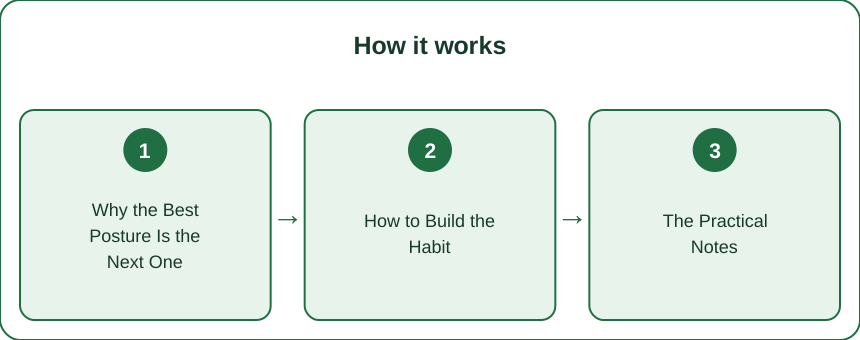
The Practical Notes
Making it stick at work: the the-it-does-not-need-to-look-like-exercise (the the movement being discreet enough for any office from the desk-exercises logic — the discreet-movement), the the-target-the-usual-problem-areas (the targeting neck, shoulders, hips and wrists from the desk-stretches logic — the usual-problem-areas), the the-hip-flexors-need-it-most (the hip flexors being the most affected by sitting from the hip-tightness logic — the hip-flexors-most), the the-eyes-need-breaks-too (the the eyes needing distance breaks alongside from the eye-neck-headache logic — the eye-breaks), the the-set-up-the-desk-properly-anyway (the proper desk setup still being worth doing from the lower-back logic — the setup-still-matters), the the-address-persistent-pain-properly (the persistent pain warranting proper assessment from the wrist-pain logic — the address-persistent-pain), the the-consistency-over-a-perfect-routine (the consistent small changes over a perfect protocol from the desk-exercises logic — the consistency-over-perfection), and the frame (the desk posture as changing rather than optimising — a rough twenty-minute cue anchored to existing triggers, thirty seconds at a time, targeting hips, neck and shoulders. Change position roughly every twenty minutes, anchor it to calls and water refills, and target the hips, neck and shoulders.)
An enormous amount of desk advice concerns finding the correct posture, and comparatively little concerns the more useful finding — that no posture, however correct, holds up for eight hours. The best posture is the next one because static loading is the issue, no position holds for hours, standing still is also static, tissue needs movement and blood flow, and frequency beats perfection. Build the habit with a twenty-minute cue, attaching it to existing triggers, standing for calls, walking to refill water, using a timer if needed, changing position rather than only standing, keeping it to thirty seconds, and stacking a stretch onto the change. Practically, it does not need to look like exercise, target the usual problem areas, remember hip flexors need it most, give your eyes breaks, set up the desk properly anyway, address persistent pain, and favour consistency.
Keep Reading
This article is for general informational purposes only and is not medical advice. Always consult a qualified health professional for guidance specific to you.