The Standing Desk: An Honest Guide to What It Fixes and What It Doesn't
The standing desk got sold as the desk-body cure — and then the early adopters discovered standing-still feet, standing-still backs and the return of the chair by 2pm. The honest guide: what the evidence supports, the transition that prevents the new complaints and the rhythm that delivers.

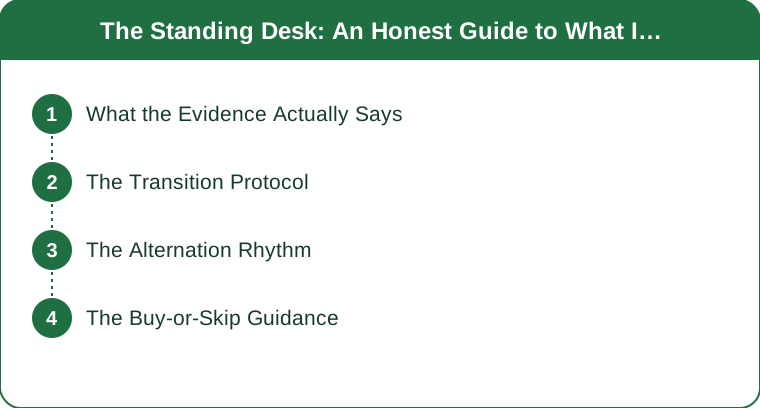
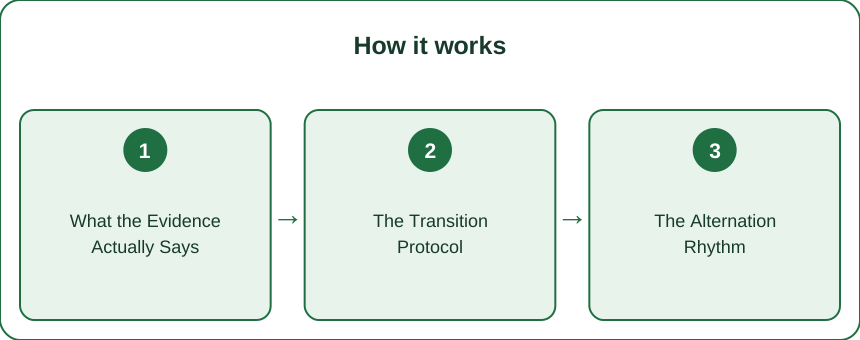
What the Evidence Actually Says
The claims audit: the calorie-burn story is small (standing burns modestly more than sitting — the weight-loss framing oversold a rounding error), the real wins are elsewhere (reduced back-and-neck discomfort in many studies — the variety mechanism; improved post-lunch alertness reports; and the biggest one: breaking up sitting time has metabolic benefits the all-day chair can’t match), the standing-still honesty (motionless standing brings its own complaints — feet, knees and veins vote against the all-day stand; the standing-desk-as-new-sameness misses the entire point), and the verdict shape (the sit-STAND desk is a variety machine — its value is the switching, not the standing).
The Transition Protocol
Starting without the week-one regret: the ramp (30-45 minutes of standing per half-day to start, growing weekly — the legs-and-feet adaptation is real; the day-one four-hour stand writes checks the arches cash), the setup double-check (elbow height and screen height re-set for standing — the desk that rises with the keyboard but leaves the monitor low just relocates the neck problem), the footwear-and-surface layer (supportive shoes or the barefoot-on-a-mat option — the anti-fatigue mat earns its cost; the heels-at-the-standing-desk combination is a podiatry appointment scheduling itself), and the movement multiplier (standing is the gateway to actual movement — the calf raises, weight shifts and pacing that sitting forbids; the stand that fidgets beats the stand that statues).

The Alternation Rhythm
The schedule that works: the 30-30 or 45-15 patterns (sit-stand cycles across the day — the research and the comfort reports both favor switching over long blocks of either; the timer or the task-based trigger: calls standing, deep work seated, email standing), the task matching honesty (precision work and long-form writing often prefer sitting — fighting it wastes willpower; the alternation assigns tasks their natural posture), the afternoon deployment (the post-lunch stand blocks the slump better than the morning one — the alertness effect where it’s needed), and the non-desk supplement (the alternation rhythm plus the hourly two-minute walk is the full prescription — the desk handles posture variety; the walks handle actual movement; neither replaces the other).
The Buy-or-Skip Guidance
The purchase decision: the converter-vs-full-desk question (the desktop riser converts the existing desk at a fraction of the cost — the right first purchase; the full electric desk earns its price at daily-driver usage), the budget alternatives (the counter-and-shelf improvised standing spots for calls and email — the zero-cost trial that tests whether YOU actually alternate before the purchase), the mat-and-shoes budget line (the accessories matter more than the desk brand), and the skip-it honesty (the person who won’t switch positions won’t be saved by furniture — the standing desk is a tool for the alternation-willing; the movement prescription works from any chair). The desk was never the cure — the switching was, and the desk just makes switching convenient.
Value is the switching, ramp the standing, mat and real shoes, calls stand and deep work sits. The standing desk is a variety machine — honest expectations, correct setup, alternate on schedule.
Keep Reading
This article is for general informational purposes only and is not medical advice. Always consult a qualified health professional for guidance specific to you.