Lower Back vs Desk Chair: The Sitting Survival Guide
The lower back’s complaint against desk work isn’t the chair — it’s the SAMENESS: one position, loaded lightly, held for hours. The survival guide: the setup that helps, the movement prescription that helps more and the honest ranking of what’s worth buying.

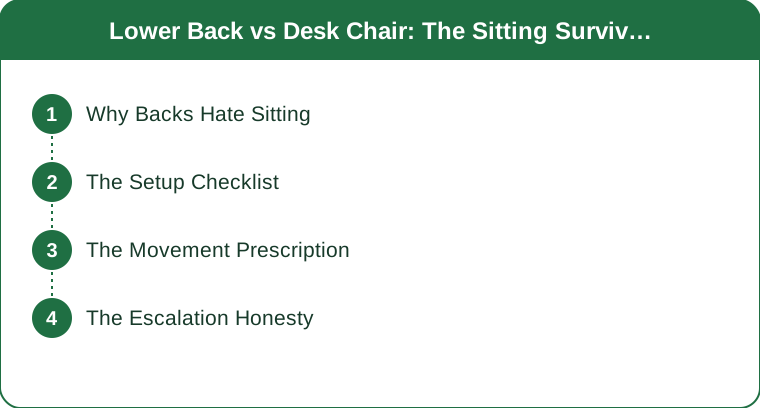
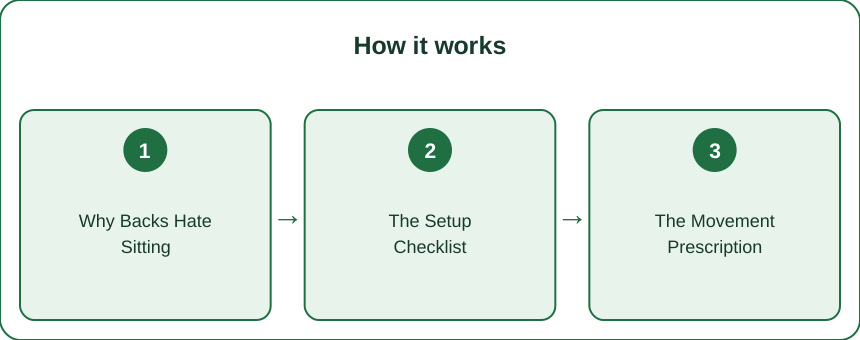
Why Backs Hate Sitting
The mechanism, corrected: sitting isn’t damaging — sustained ANY-position is (the disc-and-muscle system wants variety; the eighth consecutive hour in one posture starves tissues that motion feeds; ‘sitting is the new smoking’ oversold it — ‘stillness is the new smoking’ is closer), the slump physics (the collapsed C-curve loads discs unevenly and stretches the back’s supporting muscles into complaint — the perfect-posture obsession misses that even perfect posture HELD is the problem), and the deconditioning loop (the back that only sits weakens; the weak back complains sooner; the complaining back moves less — the loop the movement prescription breaks).
The Setup Checklist
The chair-and-desk audit (worth doing once): feet flat, knees roughly level with hips (the dangling-feet or knees-above-hips extremes both tilt the pelvis), the lumbar support meets your curve (the chair’s support or the rolled-towel budget version — the low back wants contact, not a gap), screen at eye height (the monitor’s height sets the neck, and the neck sets the whole spine — the laptop-riser is the single best cheap purchase), elbows at ~90 near the body (the reaching-forward arms drag the shoulders and back with them), and the honest budget ranking (monitor height and a decent chair beat every gadget — the standing desk is a variety tool, not a cure; standing STILL all day just relocates the sameness).

The Movement Prescription
The intervention that outranks everything: the position-change rule (every 30-45 minutes, change something — stand for the call, perch, lean back deliberately; the timer or the drink-more-water trick that forces refill trips; motion is the treatment, and any motion counts), the micro-movement menu (the seated pelvic tilts and slouch-to-tall cycles — deliberately moving THROUGH postures instead of holding one; the desk-chair-yoga sequences), the daily antidote set (the hip-flexor lunge stretch, the glute bridges and the McGill-adjacent gentle extension — the five-minute evening routine that undoes the day’s flexion bias), and the strength layer (the back that deadlifts and carries handles sitting better — the twice-weekly hinge-and-carry training is desk insurance; strong backs complain less about chairs).
The Escalation Honesty
When it’s more than desk-stiffness: the normal tier (end-of-day ache that eases with movement and weekends — the sameness complaint; the prescription above resolves it over weeks), the see-someone tier (pain radiating down a leg, numbness-and-tingling, night pain, or the ache that movement doesn’t touch — the physio-or-doctor visit that beats internet triage), the acute-flare protocol (the wrenched morning back wants gentle motion over bed rest — the walking-and-easy-movement evidence retired the lie-flat era; comfortable positions, short frequent walks, and time), and the reframe (backs are robust, adaptable structures — the desk complaint is a request for variety and strength, not evidence of fragility; answer the request and the complaints quiet). The chair was never the villain — the eight motionless hours were.
Vary the position every half hour, screen at eye height, hinge and carry twice weekly, radiating pain sees someone. The back’s desk complaint is about sameness — answer with motion and strength.
Keep Reading
This article is for general informational purposes only and is not medical advice. Always consult a qualified health professional for guidance specific to you.