The Screen Headache Triangle: Eyes, Neck and the 4pm Skull Squeeze
Quick Answer: The 4pm screen headache usually comes from three sources acting together — strained eye muscles, a forward-craned neck, and shoulders held up near your ears. Break any one side and the headache often fails to arrive. The fastest fixes: the 20-20-20 rule for your eyes, chin tucks plus a raised monitor for your neck, and an hourly exaggerated shrug-and-drop for your shoulders.
The 4pm headache rarely works alone. It’s a committee.
Your eyes have been squinting at slightly-too-small text since 9am. Your neck has been craned forward toward the screen for so long it’s stopped registering as unusual. And your shoulders have been up around your ears since roughly lunch, doing an impression of a person about to be startled.
All three vote. The skull loses.
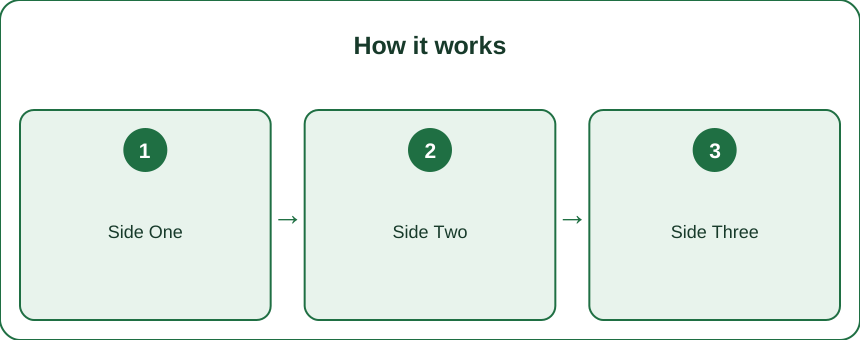
The useful part: the committee needs a fairly unanimous decision. Break any one side of the triangle and the vote often fails.

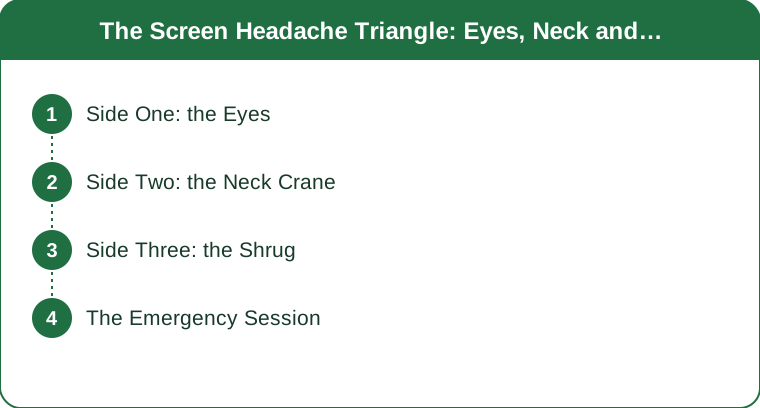
Why Does Staring at a Screen Give You a Headache?
There’s no single mechanism, which is exactly why the “just look away sometimes” advice underdelivers.
Screen work simultaneously asks your eye muscles to hold a fixed near-focus for hours, encourages a head-forward posture that loads your neck, and produces the low-grade shoulder tension that comes with concentration. Each one alone might not produce a headache. Together, they reliably do.
There’s also a fourth contributor that sponsors more 4pm headaches than people credit: dehydration. Most desk workers drink meaningfully less than they think, and the deficit shows up as head pain at almost exactly the time everyone blames the screen.
Side One: The Eyes
Sustained near-focus keeps the tiny muscles inside your eye contracted for hours at a stretch. That’s not dangerous, but it is fatiguing, and the strain radiates outward as a brow-and-temple ache.
The 20-20-20 rule: every 20 minutes, look at something 20 feet away for 20 seconds. It gives the focusing muscles a genuine break, and it takes almost no time. Set a recurring timer, because you will not remember on your own.
Fix your text size honestly. A surprising number of screen headaches are just “I’ve been squinting at 11pt text for eight months and adjusted my face instead of my settings.” Increase the size until you can read it leaning back, not leaning in.
Check your blink rate. People blink roughly 60% less while reading screens, which dries the eye surface and makes everything feel more strained. Nothing to do here but notice it and blink deliberately a few times an hour.
Get the brightness right. Your screen should roughly match the brightness of the room around it. A bright screen in a dark room is a headache generator.
Side Two: The Neck Crane
Every inch your head drifts forward toward the screen multiplies the load on your neck. The muscles at the base of your skull grip like tiny climbers holding on, and that tension refers pain up and over the head — often felt as a band across the forehead or a dull ache behind the eyes.
Chin tucks. Glide your head straight back — not tilting down, gliding, as if making a double chin on purpose. Hold 5 seconds, repeat 8 times. Do a set every hour or two. It’s unglamorous and it works.
Raise the monitor. The top of your screen should sit at or just below eye level. Most laptop users are looking 20–30 degrees downward all day, which is the crane, permanently installed. A laptop stand plus an external keyboard is the single highest-value ergonomic purchase most people can make.
Bring the screen closer, don’t lean in. Arm’s length is about right. If you’re leaning toward the screen to read it, either move the screen or increase the font — never move your head.

Side Three: The Shrug
Shoulders-as-earrings feeds the same skull-base grip from below. Most people have no idea they’re doing it, because tension you’ve held for four hours stops feeling like tension and starts feeling like your body.
The hourly reset: exaggerate the shrug — pull your shoulders up hard toward your ears for 3 seconds — then drop them completely with a long exhale. Do it three times.
The exaggeration is the point. Dropping from a high position teaches the muscles what “off” actually feels like, and a lot of people have genuinely forgotten. Trying to “relax your shoulders” from a moderately tense position rarely produces the same release.
Check your armrests and desk height. If your elbows have nowhere to rest, your shoulders will hold them up all day. Armrests at a height where your shoulders sit level, or a desk low enough that your forearms rest comfortably, removes the cause rather than treating it.
The Emergency Session: Headache Already Seated
If it’s 4:15 and the headache is already in the room, run this in order.
Warm hands on the back of the neck, thumbs pressing gently at the base of the skull, slow circles for 60 seconds. Warmth plus pressure on that spot does more than it should.
Long gaze out a window — real distance, 30 seconds or more. Let the eyes fully relax focus.
Drink a full glass of water. Then another 20 minutes later.
Three shrug-and-drops, then eight chin tucks.
Then stand up and walk for five minutes. Circulation does part of the work that stretching can’t.
One caveat that matters: recurring daily headaches deserve an eye exam and a conversation with a clinician. Uncorrected vision, an outdated prescription, jaw clenching, blood pressure, and several other things can masquerade as a screen headache. If your headache pattern is new, worsening, or comes with visual changes, numbness, or unusual severity, that’s a same-week appointment, not a stretching problem. Committees sometimes have hidden members.
5 Mistakes Everyone Makes
- Treating it as an eye problem only. Blue light glasses get bought; the neck crane continues; the headache continues.
- Stretching the neck aggressively. Yanking your head sideways into a stretch when the muscles are already irritated tends to make the next day worse. Gentle, brief, frequent beats hard and occasional.
- Waiting for the headache to start. Every fix here works far better as prevention than as treatment. Set the timers.
- Ignoring the laptop. If you work on a laptop screen for more than two hours a day without a stand, that’s the biggest single lever available to you.
- Skipping water because coffee counts. It contributes, but if your entire fluid intake is caffeinated, you’re likely running a small deficit by afternoon.
Mini FAQ
Can neck tension really cause headaches?
Yes — it’s common enough to have its own name, cervicogenic headache. Tension in the muscles at the base of the skull and upper neck refers pain forward over the head, which is why the ache often feels like it’s in your forehead or behind your eyes when the source is behind you.
Do blue light glasses help with screen headaches?
The evidence for blue light specifically causing eye strain is weak. What helps most people is the break schedule, correct text size, and screen brightness matched to the room. If glasses help you, they’re likely helping through a different route — or your prescription needed updating anyway.
How often should I take a break from my screen?
Every 20 minutes for the eyes (20 seconds is enough), and every 45–60 minutes get out of the chair for two to five minutes. The eye break and the body break are separate needs; doing only one leaves half the triangle intact.
TL;DR:
- The screen headache is three problems voting together: eyes, neck crane, and shrugged shoulders.
- Eyes: 20-20-20 rule, bigger text, brightness matched to the room.
- Neck: chin tucks 8x hourly, monitor top at eye level, laptop on a stand.
- Shoulders: exaggerate the shrug, then drop with an exhale — three times an hour.
- Hydration co-sponsors most 4pm headaches. Recurring daily headaches need an eye exam and a clinician.
Rest the eyes on schedule, retract the crane, drop the earrings, drink the water. Deny the committee one member and the skull squeeze loses quorum.
Keep Reading
This article is for general informational purposes only and is not medical advice. Always consult a qualified health professional for guidance specific to you.