Desk Exercises You Can Do at Your Chair (No One Will Notice)
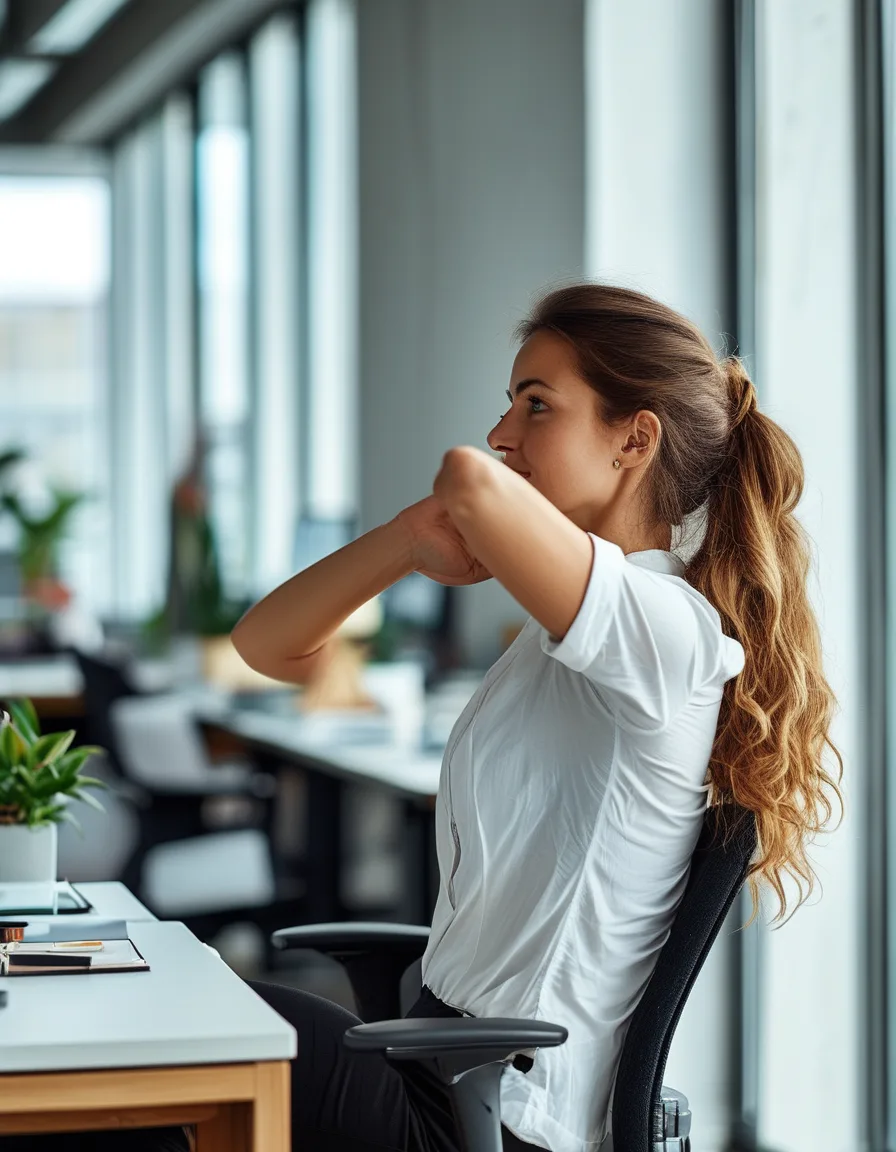
You do not need a gym break to counter a day of sitting — a handful of discreet exercises right at your desk ease the stiffness and keep you moving. No one will even notice. Here is why desk movement matters, the exercises you can do at your chair, and how to make them a habit.
Why Desk Movement Matters
Countering the sitting: the the-sitting-stiffens-and-aches (the hours of sitting causing stiffness and aches in the neck, back and hips from the lower-back logic — the the-sitting-toll), the the-movement-breaks-the-stillness (the small movements countering the harm of prolonged stillness from the standing-desk logic — the break-the-stillness), the the-relieves-tension (the desk exercises easing the tension that builds up from the neck-shoulder logic — the release-the-tension), the the-boosts-energy-and-focus (the movement refreshing energy and focus through the day — the the-focus-boost), the the-no-gym-needed (the chair exercises needing no equipment or leaving your desk — the zero-barrier), and the reframe (the desk movement as small, discreet exercises that counter sitting’s stiffness — relief and energy right at your chair).

The Discreet Exercises to Do at Your Chair
Moves no one will notice: the the-seated-marches-and-leg-lifts (the seated marches or leg lifts to move the lower body — the the-lower-body-move), the the-neck-and-shoulder-releases (the gentle neck stretches and shoulder rolls easing tension from the neck-shoulder logic — the release-the-top), the the-seated-spinal-twist (the a subtle seated twist to mobilize the back from the lower-back logic — the the-twist), the the-chest-opener (the opening the chest to counter the hunch from the upper-back logic — the open-the-chest), the the-seated-glute-squeezes (the discreet glute squeezes to activate a sitting body — the wake-the-glutes), the the-ankle-circles-and-calf-raises (the ankle circles and seated calf raises for circulation — the move-the-lower-legs), the the-wrist-and-hand-stretches (the wrist stretches for typing strain from the wrist logic — the ease-the-wrists), and the the-seated-core-engagement (the gentle core engagement while sitting tall — the engage-the-core).
The Make-It-a-Habit Notes
Building the habit: the the-anchor-to-cues (the tying desk exercises to work cues — every call, every hour from the standing-desk logic — the the-cue), the the-set-reminders (the reminders to move regularly through the day — the prompt-yourself), the the-stand-and-move-too (the standing and walking breaks alongside chair exercises from the standing-desk logic — the stand-up-too), the the-keep-them-short (the a minute here and there being enough — the little-and-often), the the-pair-with-posture (the resetting posture along with the movement from the upper-back logic — the posture-too), the the-consistency (the regular small movements adding up over the day — the consistent-movement), the the-make-it-routine (the building movement into the workday structure — the the-routine), and the frame (the desk exercises as discreet seated marches, stretches and squeezes anchored to work cues — countering sitting’s stiffness right at your chair. Do subtle neck, back, glute and ankle moves through the day, anchor them to cues like calls, and add standing breaks).
You do not need a gym break to counter a day of sitting — a handful of discreet exercises right at your desk ease the stiffness and keep you moving, unnoticed. Desk movement matters because sitting stiffens and aches the neck, back and hips, small movements break the harmful stillness, they relieve tension, boost energy and focus, and need no gym. The discreet exercises: seated marches and leg lifts, neck and shoulder releases, a subtle seated twist, a chest opener, seated glute squeezes, ankle circles and calf raises, wrist stretches, and gentle core engagement. Make them a habit by anchoring them to work cues like calls or the hour, setting reminders, adding standing and walking breaks, keeping them short, pairing them with posture resets, and staying consistent. Relief and energy right at your chair.
Keep Reading
This article is for general informational purposes only and is not medical advice. Always consult a qualified health professional for guidance specific to you.